Medicine finder

Know the plant before you take it.

The medicines of this territory, how to recognise them, when they are ready, and what they are confused with. Built for people who are already learning from someone, to carry into the field alongside them.

Before you take anything

Ask first.

Offer something before you take anything. Say who you are and say what the medicine is for. Never take the first plant you find, never take all of them, and take only what you will actually use.

This page is a starting point for people already learning from someone. It is not a substitute for that person. The plants here grow beside plants that will kill you, and the difference between them is learned in the field, not on a screen.

We do not publish where any of these grow. You will find the kind of country to walk here, and nothing more specific than that. Known patches get stripped when they are written down.

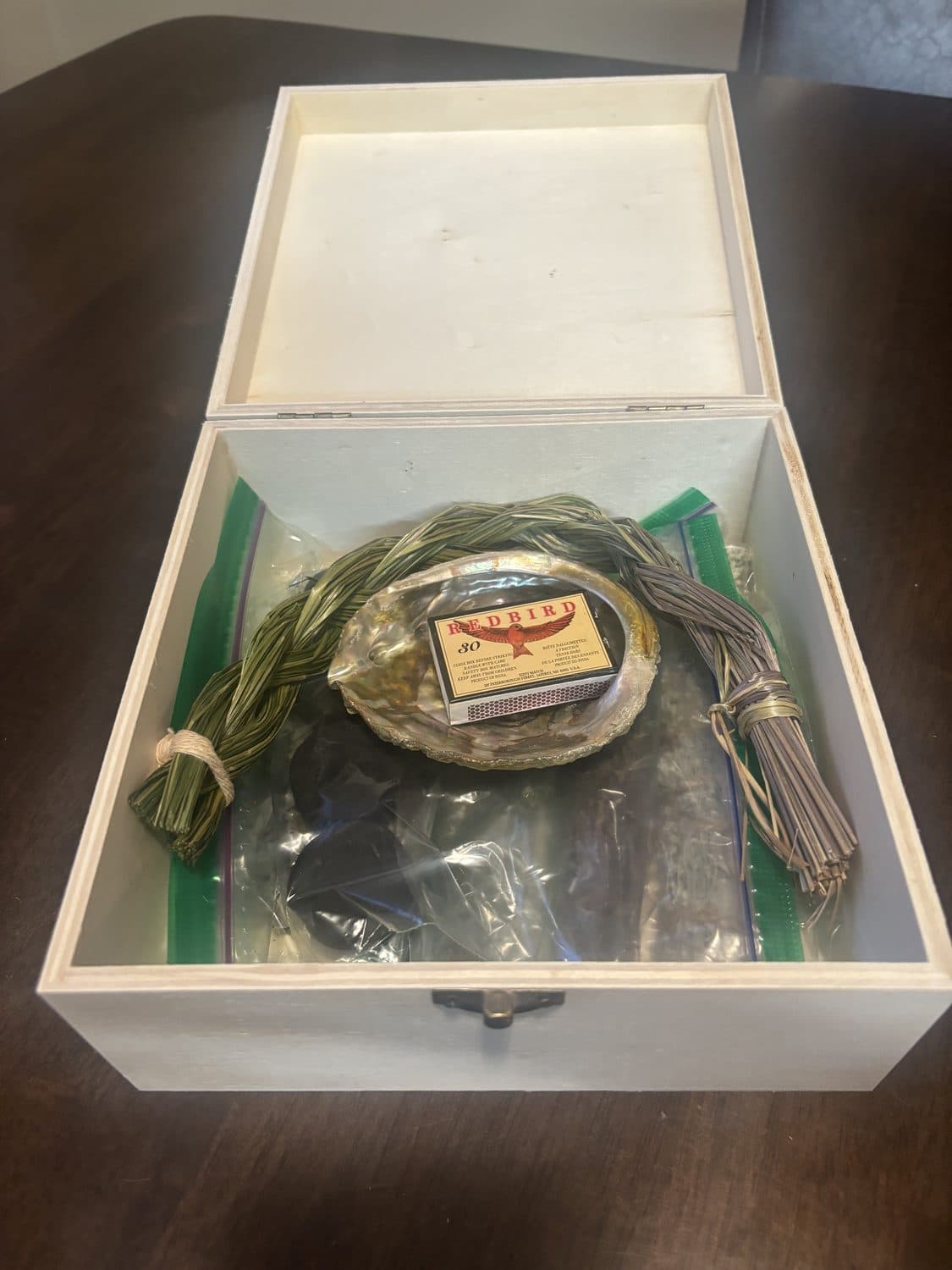
A wooden box holding braided sweetgrass, sage, and an abalone shell
Medicines kept together, ready for a session
Start here

The four sacred medicines.

Tobacco in the east, sage in the south, cedar in the west, sweetgrass in the north. This teaching is set out in the Montana Indian Nations Sacred Plant Guide.

Or start with the country

Where are you looking?

N. Plains35Rockies18

Regions, at the scale a field guide works in: this kind of medicine grows in this kind of country. We do not map individual patches, and we will not. A patch that gets written down is a patch that gets stripped.

The medicines here are Blackfoot and Cree prairie country for now, so most of the continent is still empty. The regions are drawn and waiting.

40Medicines listed
27Ready in July
13With a Blackfoot or Cree name
3Deadly plants to know

13 medicines match.

Bear root

Ligusticum porteri

minwék Cree

With a knowledge keeperScarce, please do not harvest

A mountain root with a spicy celery smell, named for the bears that dig it when they come out of hibernation weak. Named in the Blackfeet and Nakoda blends, and one of the most respected roots on the plains. It belongs to the carrot family, which is why this one is learned in person.

Deadly look-alike: Water hemlock, Poison hemlock

Roots Aug to Oct

Mountain forest · Foothills and shrubland

How to know it

Bearberry

Arctostaphylos uva-ursi

Kakahsiin Blackfoot · ah-chi-kah-si-pah-kwah Cree

Ask firstIn season nowTake care, harvest lightly

A low evergreen mat of small leathery leaves with dry red berries. The dried leaf is the base of the smoking mixtures used across this territory.

Leaves Jan to Dec · Berries Aug to Oct

Sandy and gravelly ground · Mountain forest · Foothills and shrubland · Open prairie

How to know it

Canada buffaloberry

Shepherdia canadensis

Ask firstIn season now

A bitter red berry full of natural soap that whips into a foam when beaten. Sharp, distinctive, and used in small amounts rather than eaten by the handful.

Deadly look-alike: Baneberry

Berries Jul to Sep

Aspen parkland · Mountain forest · Foothills and shrubland · Coulee slopes

How to know it

Cedar

Thuja plicata

mihkwásit Cree

Ask firstTake care, harvest lightly

One of the four sacred medicines. Cedar does not grow on this prairie; it comes from the west, and it has moved along trade routes into this country for a very long time. Guardian of the west in the medicine wheel.

Leaves May to Jun · Bark May to Jun

Mountain forest

How to know it

Common juniper

Juniperus communis

Ask firstIn season now

The prickly-needled juniper of the foothills and open forest, named in the Blackfeet, Chippewa-Cree, Nakoda and Northern Cheyenne blends. Different from the flat creeping juniper of the coulee rims.

Berries Aug to Oct · Leaves Jan to Dec

Foothills and shrubland · Mountain forest · Sandy and gravelly ground · Coulee slopes

How to know it

Fireweed

Chamerion angustifolium

Learn and gatherIn season now

The tall magenta spike that comes up first after a burn or a cut line. Young shoots are eaten, and the leaves are dried for tea.

Stems May to Jun · Leaves Jun to Aug · Flowers Jul to Aug

Roadsides and disturbed ground · Mountain forest · Aspen parkland · Foothills and shrubland

How to know it

Labrador tea

Rhododendron groenlandicum

Ask firstIn season nowTake care, harvest lightly

The muskeg tea plant. A low evergreen shrub of bogs and wet spruce ground whose leaves roll under at the edges and carry rusty wool beneath. One of the most widely drunk plants in the north.

Deadly look-alike: Bog laurel, Bog rosemary

Leaves Jun to Sep

Sloughs and wet meadows · Mountain forest · Foothills and shrubland

How to know it

Lodgepole pine

Pinus contorta

oskâhtak Cree

Learn and gatherIn season now

The straight slender pine of the foothills, and the tree that gave the lodgepole its name. Needles for tea, inner bark for food, pitch for wounds.

Needles and cones Apr to Jun · Bark May to Jun · Sap and pitch Jan to Dec

Mountain forest · Foothills and shrubland

How to know it

Sweet pine

Abies lasiocarpa

kutoyiss Blackfoot · sitapikwan Cree

Ask firstIn season now

A mountain fir whose needles carry a sweet citrus smell. Traded down out of the mountains into Blackfoot country for a very long time, and used as a smudge and a scent.

Needles and cones Jan to Dec · Bark May to Aug

Mountain forest · Foothills and shrubland

How to know it

Trembling aspen

Populus tremuloides

Ask first

The white-barked tree whose leaves shake in the smallest breeze, and the tree that gives the aspen parkland its name. The inner bark carries the same family of compounds as aspirin.

Bark May to Jun

Aspen parkland · Foothills and shrubland · Coulee slopes · Mountain forest

How to know it

White spruce

Picea glauca

Patakh'i Blackfoot · sihta Cree · iyinâhtik Cree

Learn and gatherIn season now

The spruce of the river valleys and the north. Spring tips are gathered for tea, the inner bark is food in a hard winter, and the pitch is used on the skin. Named in both Blackfoot and Cree.

Deadly look-alike: Yew

Needles and cones May to Jun · Bark May to Jul · Sap and pitch Jan to Dec

Mountain forest · Riverbanks and willow flats · Foothills and shrubland · Aspen parkland

How to know it

Wild raspberry

Rubus idaeus

Learn and gatherIn season now

Thorny canes in coulee bottoms, clearings and burns. Fruit in late summer, and a leaf tea that is one of the most widely used mild remedies in the north.

Berries Jul to Sep · Leaves Jun to Aug

Coulee slopes · Aspen parkland · Mountain forest · Roadsides and disturbed ground

How to know it

Wild strawberry

Fragaria virginiana

Learn and gatherIn season now

Small wild strawberries, far better than anything in a shop, in open woods and grassy clearings through early summer. The leaf makes a good mild tea.

Berries Jun to Jul · Leaves May to Aug

Aspen parkland · Open prairie · Foothills and shrubland · Mountain forest

How to know it
Through the year

When these are ready.

A guide, not a rule. Seasons shift with the year, the elevation and the weather. The land tells you when, this table only tells you roughly when to start looking.
MedicineJanuaryFebruaryMarchAprilMayJuneJulynowAugustSeptemberOctoberNovemberDecember
Bear rootBear root, January: not in seasonBear root, February: not in seasonBear root, March: not in seasonBear root, April: not in seasonBear root, May: not in seasonBear root, June: not in seasonBear root, July: not in seasonBear root, Roots, August: in seasonBear root, Roots, September: in seasonBear root, Roots, October: in seasonBear root, November: not in seasonBear root, December: not in season
BearberryBearberry, Leaves, January: in seasonBearberry, Leaves, February: in seasonBearberry, Leaves, March: in seasonBearberry, Leaves, April: in seasonBearberry, Leaves, May: in seasonBearberry, Leaves, June: in seasonBearberry, Leaves, July: in seasonBearberry, Leaves, August: in seasonBearberry, Leaves, September: in seasonBearberry, Leaves, October: in seasonBearberry, Leaves, November: in seasonBearberry, Leaves, December: in season
Canada buffaloberryCanada buffaloberry, January: not in seasonCanada buffaloberry, February: not in seasonCanada buffaloberry, March: not in seasonCanada buffaloberry, April: not in seasonCanada buffaloberry, May: not in seasonCanada buffaloberry, June: not in seasonCanada buffaloberry, Berries, July: in seasonCanada buffaloberry, Berries, August: in seasonCanada buffaloberry, Berries, September: in seasonCanada buffaloberry, October: not in seasonCanada buffaloberry, November: not in seasonCanada buffaloberry, December: not in season
CedarCedar, January: not in seasonCedar, February: not in seasonCedar, March: not in seasonCedar, April: not in seasonCedar, Leaves, May: in seasonCedar, Leaves, June: in seasonCedar, July: not in seasonCedar, August: not in seasonCedar, September: not in seasonCedar, October: not in seasonCedar, November: not in seasonCedar, December: not in season
Common juniperCommon juniper, Leaves, January: in seasonCommon juniper, Leaves, February: in seasonCommon juniper, Leaves, March: in seasonCommon juniper, Leaves, April: in seasonCommon juniper, Leaves, May: in seasonCommon juniper, Leaves, June: in seasonCommon juniper, Leaves, July: in seasonCommon juniper, Berries, August: in seasonCommon juniper, Berries, September: in seasonCommon juniper, Berries, October: in seasonCommon juniper, Leaves, November: in seasonCommon juniper, Leaves, December: in season
FireweedFireweed, January: not in seasonFireweed, February: not in seasonFireweed, March: not in seasonFireweed, April: not in seasonFireweed, Stems, May: in seasonFireweed, Stems, June: in seasonFireweed, Leaves, July: in seasonFireweed, Leaves, August: in seasonFireweed, September: not in seasonFireweed, October: not in seasonFireweed, November: not in seasonFireweed, December: not in season
Labrador teaLabrador tea, January: not in seasonLabrador tea, February: not in seasonLabrador tea, March: not in seasonLabrador tea, April: not in seasonLabrador tea, May: not in seasonLabrador tea, Leaves, June: in seasonLabrador tea, Leaves, July: in seasonLabrador tea, Leaves, August: in seasonLabrador tea, Leaves, September: in seasonLabrador tea, October: not in seasonLabrador tea, November: not in seasonLabrador tea, December: not in season
Lodgepole pineLodgepole pine, Sap and pitch, January: in seasonLodgepole pine, Sap and pitch, February: in seasonLodgepole pine, Sap and pitch, March: in seasonLodgepole pine, Needles and cones, April: in seasonLodgepole pine, Needles and cones, May: in seasonLodgepole pine, Needles and cones, June: in seasonLodgepole pine, Sap and pitch, July: in seasonLodgepole pine, Sap and pitch, August: in seasonLodgepole pine, Sap and pitch, September: in seasonLodgepole pine, Sap and pitch, October: in seasonLodgepole pine, Sap and pitch, November: in seasonLodgepole pine, Sap and pitch, December: in season
Sweet pineSweet pine, Needles and cones, January: in seasonSweet pine, Needles and cones, February: in seasonSweet pine, Needles and cones, March: in seasonSweet pine, Needles and cones, April: in seasonSweet pine, Needles and cones, May: in seasonSweet pine, Needles and cones, June: in seasonSweet pine, Needles and cones, July: in seasonSweet pine, Needles and cones, August: in seasonSweet pine, Needles and cones, September: in seasonSweet pine, Needles and cones, October: in seasonSweet pine, Needles and cones, November: in seasonSweet pine, Needles and cones, December: in season
Trembling aspenTrembling aspen, January: not in seasonTrembling aspen, February: not in seasonTrembling aspen, March: not in seasonTrembling aspen, April: not in seasonTrembling aspen, Bark, May: in seasonTrembling aspen, Bark, June: in seasonTrembling aspen, July: not in seasonTrembling aspen, August: not in seasonTrembling aspen, September: not in seasonTrembling aspen, October: not in seasonTrembling aspen, November: not in seasonTrembling aspen, December: not in season
White spruceWhite spruce, Sap and pitch, January: in seasonWhite spruce, Sap and pitch, February: in seasonWhite spruce, Sap and pitch, March: in seasonWhite spruce, Sap and pitch, April: in seasonWhite spruce, Needles and cones, May: in seasonWhite spruce, Needles and cones, June: in seasonWhite spruce, Bark, July: in seasonWhite spruce, Sap and pitch, August: in seasonWhite spruce, Sap and pitch, September: in seasonWhite spruce, Sap and pitch, October: in seasonWhite spruce, Sap and pitch, November: in seasonWhite spruce, Sap and pitch, December: in season
Wild raspberryWild raspberry, January: not in seasonWild raspberry, February: not in seasonWild raspberry, March: not in seasonWild raspberry, April: not in seasonWild raspberry, May: not in seasonWild raspberry, Leaves, June: in seasonWild raspberry, Berries, July: in seasonWild raspberry, Berries, August: in seasonWild raspberry, Berries, September: in seasonWild raspberry, October: not in seasonWild raspberry, November: not in seasonWild raspberry, December: not in season
Wild strawberryWild strawberry, January: not in seasonWild strawberry, February: not in seasonWild strawberry, March: not in seasonWild strawberry, April: not in seasonWild strawberry, Leaves, May: in seasonWild strawberry, Berries, June: in seasonWild strawberry, Berries, July: in seasonWild strawberry, Leaves, August: in seasonWild strawberry, September: not in seasonWild strawberry, October: not in seasonWild strawberry, November: not in seasonWild strawberry, December: not in season
  • Roots
  • Leaves
  • Berries
  • Bark
  • Stems
  • Flowers
  • Needles and cones
  • Sap and pitch
Walk away from these

Three plants that kill people here.

A finder that only shows you what to pick is half a tool. These three grow in this territory, they are mistaken for things people gather, and they are the reason the identification notes on every entry are as long as they are.

Water hemlock

Cicuta maculata

Mistaken for wild parsnip and other roots, wild carrot, yarrow, anything gathered in a slough

How to tell: Chambered root with yellow oily sap, hollow purple-streaked stem, and leaf veins ending in the notches between the teeth. Any one of these on a plant in wet ground means stop. Yarrow, which people compare it to, has soft feathery aromatic leaves and a solid stem carrying one flat flower head.

The root is among the most violently poisonous plant material in North America. A piece the size of a walnut can kill an adult, and seizures can begin within an hour. There is no home remedy. This is an emergency: call 911.

Sloughs and wet meadows · Riverbanks and willow flats · Roadsides and disturbed ground

Death camas

Anticlea elegans and Toxicoscordion venenosum

Mistaken for wild onion, edible camas bulbs

How to tell: Crush a leaf or scratch the bulb. Wild onion smells strongly of onion. Death camas smells of nothing. If you are looking at a grass-like plant with a bulb and there is no onion smell, leave it in the ground.

The whole plant is poisonous, the bulb most of all. Poisoning causes vomiting, a dangerous drop in blood pressure and heart rhythm, and can be fatal. It kills sheep and cattle in this province most springs. Call 911.

Open prairie · Coulee slopes · Foothills and shrubland

Poison hemlock

Conium maculatum

Mistaken for yarrow, wild carrot, cow parsnip, wild parsley

How to tell: Hairless purple-blotched hollow stem, foul mousy smell, umbrella-shaped flower clusters. Yarrow is much shorter, its stem is solid and hairy with no purple, its leaves are soft and feathery, it smells sweet, and its flowers form one flat head on one stem.

All parts are poisonous and it acts on the nervous system, causing progressive paralysis. It has killed people who mistook it for an edible plant. Call 911.

Roadsides and disturbed ground · Riverbanks and willow flats · Sloughs and wet meadows

Learn it in person

This page is not the teacher.

We run medicine sessions and walks alongside knowledge keepers. That is where this is properly learned.

See what is coming up